Last updated November 18, 2026






Free written scope consultation - allowances, timeline, and change-order rules on paper before a single trade is scheduled
Construction Warning Signs: A North Miami Homeowner’s Reference Guide
A hairline crack running diagonally from the corner of a window frame isn’t cosmetic. In North Miami’s expansive clay soils, that diagonal line is often the first legible signature of differential foundation settlement, and catching it at the hairline stage costs a fraction of catching it at the gap stage. Most structural and material failures in North Miami homes announce themselves weeks or months before they turn expensive. The trick is knowing which cues matter. This reference guide translates what you actually see on stucco, concrete, drywall, roofs, pavers, and interior walls into plain-language diagnoses, so you can triage accurately instead of panicking at shadows or ignoring real damage.
Quick Answer
The warning signs that matter most in North Miami homes are diagonal cracks that widen into stair-step patterns, roof granules pooling in gutters, fascia staining after heavy rain, and soft drywall near window frames and baseboards. Each of these points to a specific mechanism – soil movement, roof wear, water intrusion, or trapped humidity – and each has a clear threshold where it shifts from a 30-day monitor to a call-your-contractor-today situation. Match the sign to the threshold and you’ll avoid most expensive surprises.
Styles & brands we work with
- Kitchen remodeling
- Bathroom remodeling
- Home additions & ADU
- Roofing
- Windows & doors
- Driveway & pavers
- Fence
Table of Contents
- The North Miami Crack Classification System
- Roof Warning Signs You Can Read From the Ground
- Driveway and Hardscape Signals: Settling vs. Base Failure
- Interior Moisture Indicators in North Miami Humidity
- Efflorescence on New Pavers: What It Really Means
- The 30-Day Monitor vs. Call-Today Decision Tree
- Common Mistakes to Avoid
- Frequently Asked Questions
The North Miami Crack Classification System
Not every crack is a problem, but the size, direction, and location of a crack tell you almost everything. In North Miami, the soil layer is our first filter: the local clay expands when wet and contracts when dry, and the seasonal swing here produces different crack behavior than you’d see in drier inland climates. That’s why a diagonal crack in North Miami reads differently than the same crack in, say, Arizona. In our experience, the pattern matters more than the width.
Use this simple three-tier system to classify what you’re looking at:
- Cosmetic shrinkage. Very fine cracks (think hair width) on stucco or drywall, mostly vertical, appearing shortly after a plaster or paint job. These come from curing and drying. They don’t change width over months and don’t follow structural lines. Monitor them, but they rarely escalate.
- Thermal and seasonal movement. Slightly wider cracks at exterior wall joints, along mortar lines of block walls, or where two different materials meet. These can widen and close by a millimeter or two across the wet and dry seasons. Mark the ends with a pencil and a date. If the change stays under a couple of millimeters, it’s movement you can monitor.
- Structural movement. Diagonal cracks running from window or door corners, stair-step patterns following mortar joints on block walls, horizontal cracks along the middle of a foundation wall, or any crack that visibly widens between checks. These indicate differential settlement or active structural movement. They’re the cracks you call on.
For the third category, the direction is your best clue. A diagonal crack that runs from the top corner of a window down and away, plus a hairline crack on the opposite side of the same wall, usually means one part of the foundation is settling faster than another. On a North Miami home that’s often tied to soil moisture pulling away from the foundation on one side. If the home was built on a slab and the same pattern repeats at multiple openings, you need a structural evaluation, not a cosmetic patch.
What you should not do: fill a structural crack with caulk and call it done. Caulk hides the evidence, and the movement continues behind it. For any crack that fits tier three, get a professional opinion before you make it invisible.
Roof Warning Signs You Can Read From the Ground
You don’t need to climb a roof to read its condition. Most of the useful signs are visible from the driveway, and a roof in North Miami gets more UV and heavy-rain stress than almost any other part of the home. In our experience, three patterns tell the story: granule loss, ridge line deformation, and fascia staining.
Granule loss patterns
Shingles shed granules as they age, and the pattern of loss tells you where you are in the roof’s service life. When granules pool at the base of a downspout or in the gutter, that’s normal wear, but when the loss becomes patchy – bare spots on the sun-facing slope while the shaded slope still looks full – you’re likely in the last third of the shingle’s life. Roofs installed with GAF, CertainTeed, Owens Corning, Atlas, Tamko, or Boral products wear at predictable rates, and a patchy pattern on the sun side is your cue to start planning a replacement rather than reacting to a leak.
Ridge line deformation
A ridge that looks wavy or dips between the rafters suggests decking softness, heat damage, or a settling issue in the roof structure. On an older North Miami roof, a low spot that wasn’t there a season ago is the more serious version – it can funnel water toward a single point and turn a slow leak into a fast one. If you can see a dip from the ground, get it inspected.
Fascia staining
Brown or gray streaks running down the fascia board below the roofline mean water has been escaping behind the gutter. Sometimes the cause is simple – a loose gutter, a failed hanger, a flashing joint that’s pulled away – but chronic fascia staining is often the first ground-level sign that water has been entering the wall cavity for a while. In North Miami, warm, humid air inside the wall makes that moisture a mold risk as much as a rot risk.
For a low-slope or flat roof section, the signs shift: ponding water that lingers long after rain, blistering membrane, and open seams at the field perimeter. All three are worth a call, because flat roof failures tend to appear suddenly.
Driveway and Hardscape Signals: Settling vs. Base Failure
Every paver driveway moves a little. Sand joints shift, and a couple of pavers can rock by a millimeter. That’s settling. Base failure is a different animal, and the difference usually shows up in the shape of the movement rather than the amount.
What normal settling looks like
A slightly raised paver here and there, a small dip at the edge of the driveway, sand working its way into a low spot. In North Miami, hot afternoons and heavy rain will do this to almost any paver surface. Individual pavers that you can rock with a fingernail but that sit flush with their neighbors are usually within normal tolerance.
What base failure looks like
- Wave-shaped depressions that run across several pavers in a repeating pattern, not just one low spot
- A section that sinks as a unit while the rest of the driveway stays level, typically in the drive lane where tires track
- Sand joints that open wide and don’t hold new sand no matter how often you refill them
- Pavers popping up or rocking underfoot, especially along the transition to the sidewalk or garage slab
- A visible gap between the pavers and the garage slab, often wide enough to see daylight
North Miami hardscape failures often trace back to drainage: clay soil that stays wet under a paver bed eventually loses its compaction, and a section of the drive sinks. Once the base layer is compromised, re-sanding or spot-repairing pavers won’t hold. A proper repair means pulling up the affected section, re-grading, re-compacting, and reinstalling. This is the kind of work the team at North Miami Construction handles regularly as part of driveway & pavers, using Belgard, Unilock, Tremron, Techo-Bloc, or Cambridge Pavers depending on what the design calls for.
The threshold: if one paver rocks, mark it and watch. If a section sinks as a unit or pops up, that’s a base repair.
Interior Moisture Indicators in North Miami Humidity
North Miami’s year-round humidity doesn’t just cause mold; it gives you weeks of warning before visible mold appears. The early signs show up in four predictable locations, and if you learn those four, you can usually catch the problem before it becomes a remediation project.
Behind baseboards
Pull the baseboard back in a room that feels humid and check for darkened drywall, a musty smell close to the floor, or paint that’s bubbled or bubbling off. Dark fuzz or a mottled brown patch on the paper face of the drywall is the earliest stage of mold growth. In North Miami, that humidity is coming from outside – typically a failed window seal or a corner where water pools against the exterior. Follow the moisture back to the source before you clean it up.
Around window frames
Look for paint that crazes, drywall that feels soft to the touch, or a faint musty smell when you open a window. If rain has been getting behind the frame, the moisture wicks into the wall cavity and shows up as a discolored patch on the interior side. Around windows and doors, one of the strongest prevention tools is the assembly itself: impact-rated lines like PGT, CGI, and Therma-Tru handle wind-driven rain and reduce air infiltration far better than builder-grade units, which is why we lean toward them on North Miami homes.
In garage transitions
The step from garage slab to house interior is a classic entry point for moisture. If the drywall on the house side of that wall feels soft near the floor, or you can see bubbling paint or efflorescence on the block, water is finding its way in.
Attic and ceiling corners
Dark streaks on the ceiling or attic sheathing, or a musty smell in closets that share a wall with the attic, both suggest a roof or ventilation issue feeding the home’s humidity.
If you find any of these, follow this quick process:
- Take a photo and note the date and location.
- Check the exterior source directly above or behind the moisture – window, roofline, or transition.
- If you see active water (damp drywall, dripping, or a clearly saturated spot), call for a professional assessment the same day. If it’s a faint odor or a small discolored patch, monitor it for two weeks with a fresh photo.
For broader renovations where moisture control is part of the design, a conversation with the team about home additions & ADU and envelope air-sealing is often the smart first step.
Efflorescence on New Pavers: What It Really Means
When white, powdery staining appears on a newly installed paver surface, most homeowners assume the pavers are defective or the contractor used a bad material. Almost always, the real cause is a sealant failure or a moisture issue in the installation, not the pavers themselves. Efflorescence is mineral salts migrating to the surface as moisture moves through the concrete or the setting bed. On a fresh installation in North Miami, it appears most often in the weeks after heavy rain.
Here’s what actually happens: the pavers were sealed too soon after installation, while moisture was still rising from the setting bed, and the sealant trapped it. The salts had nowhere to go but up through the surface. The fix is not to reseal immediately – that makes it worse. The fix is to let the pavers dry, remove the sealed layer, and re-seal once the substrate is properly cured. A reputable installer will come back and correct the sealing rather than blame the product.
Where efflorescence is genuinely a material or site problem is when it keeps returning after proper sealing and a drying period, or when it appears in a pattern that traces to a single low spot where water pools. Both cases point to a drainage issue in the base, not a paver defect. We install paver systems from brands like Belgard and Unilock, and we still see efflorescence on new installations when the sealing schedule slips. It’s a process signal, not a brand signal.
The threshold: efflorescence showing up on a new installation within the first weeks is a call-your-contractor conversation about the seal. Efflorescence that comes back repeatedly after the substrate has dried is a drainage conversation.
The 30-Day Monitor vs. Call-Today Decision Tree
This is the part most guides skip. Knowing what a sign means is only half the job; knowing when to act is the other half. Use this checklist to sort any warning sign into one of two buckets.
Monitor for 30 days
- Hairline cracks with no visible movement (mark with pencil and date)
- Light granule loss on a shaded slope
- A single rocking paver near the driveway edge
- A faint musty smell with no visible moisture
- Minor paint bubbling on one window frame
- Efflorescence on a recently installed paver surface
Call a professional today
- Any crack that visibly widens between checks, or a stair-step crack in block
- Ridge line that dips from the ground in a spot that wasn’t there a season ago
- Pavers that pop up or sink as a section, especially along a garage transition
- Damp drywall, active dripping, or visible dark fuzz on drywall
- Fascia staining that reappears after a rainstorm
- Water ponding on a flat roof or membrane blistering
When you call, have the practical details ready: the location of the sign, roughly when you first noticed it, whether the weather was dry or wet around that time, and a photo. That combination saves everyone time. For fence lines and boundary issues, a damaged line of fence installation – leaning posts, rusted or popped hardware – also belongs in this decision tree if the fence has become a safety issue. Our technicians have up to 9 years of experience reading these cues across North Miami homes, and we can usually tell you by phone whether a photo warrants a visit.
For anything structural, plumbing, or electrical, the safety rule is simple: don’t touch it yourself. A crack that’s actually structural movement, a roof leak that’s feeding ceiling moisture, or a pane of impact glass that’s come loose in its frame all need a trained professional. Warning signs are information, not an invitation to DIY.
Common Mistakes to Avoid
- Caulking a crack instead of reading it. Caulk hides structural movement and lets it continue behind the surface. If the crack widens between checks, it needs a professional, not a tube of sealant.
- Judging roof condition by shingle age alone. In North Miami, UV and rain age a roof faster on some slopes than others. Read the granule pattern on the sun side, not the manufacturer’s calendar.
- Assuming new-paver efflorescence means bad product. It almost always traces to sealant timing or trapped moisture, and the fix is re-sealing after a proper drying period. Blaming the product leads to an unnecessary replacement.
- Ignoring the garage transition. The step from garage slab to house is one of the most common moisture entry points in North Miami homes, and it’s the easiest place to catch a problem early.
- Cleaning mold without finding the source. A bleached patch on drywall says nothing about the moisture behind it. Track the source – window seal, roofline, or slab transition – before you clean.
- Spot-filling pavers over a failed base. Re-sanding a sunken section buys a season at best. If a section sinks as a unit, the base has to be re-graded and re-compacted.
- Resealing a problem roof. A sealant over a failing membrane or open flashing joint traps water and accelerates rot. Diagnose first, then repair.
- Waiting for visible mold before acting on moisture. In North Miami humidity, the musty smell and the soft drywall arrive weeks before the visible growth. Treat the smell as the alarm, not the afterthought.
See the difference
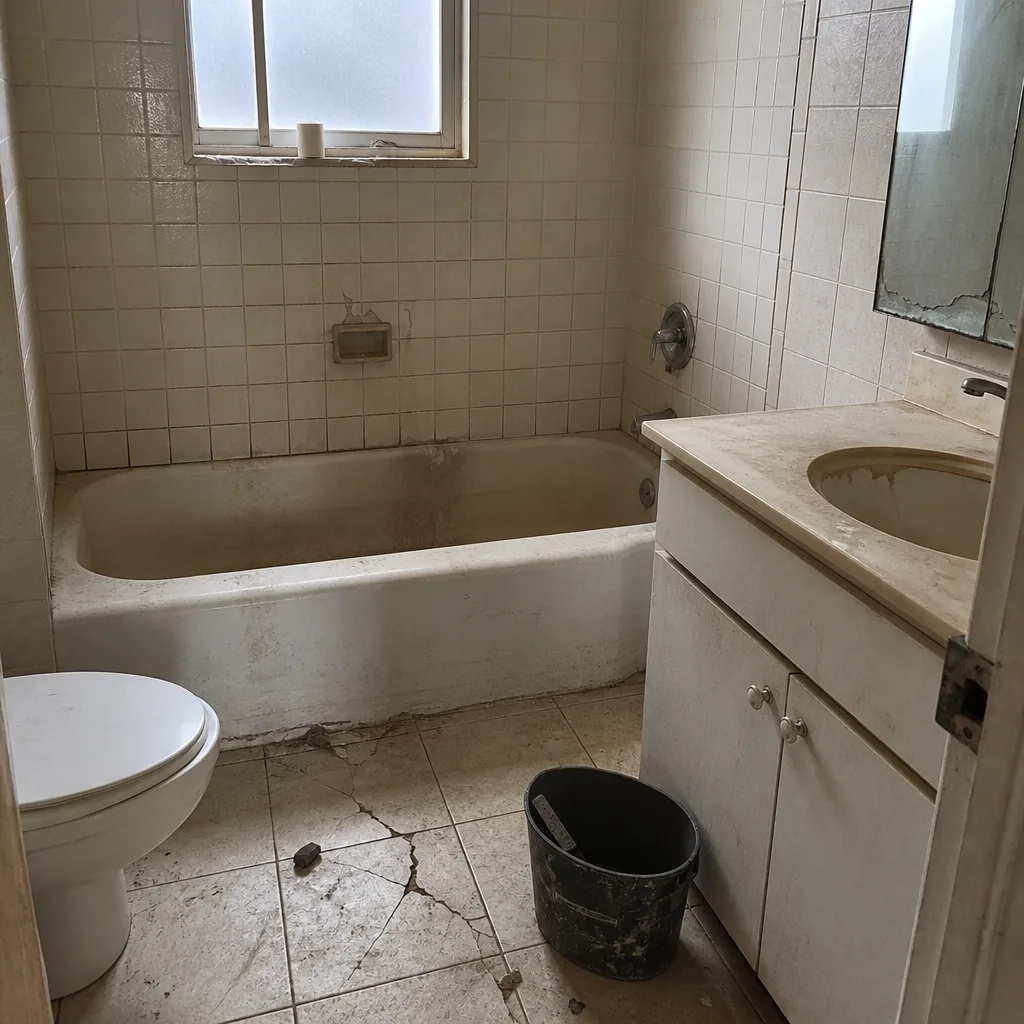 Before
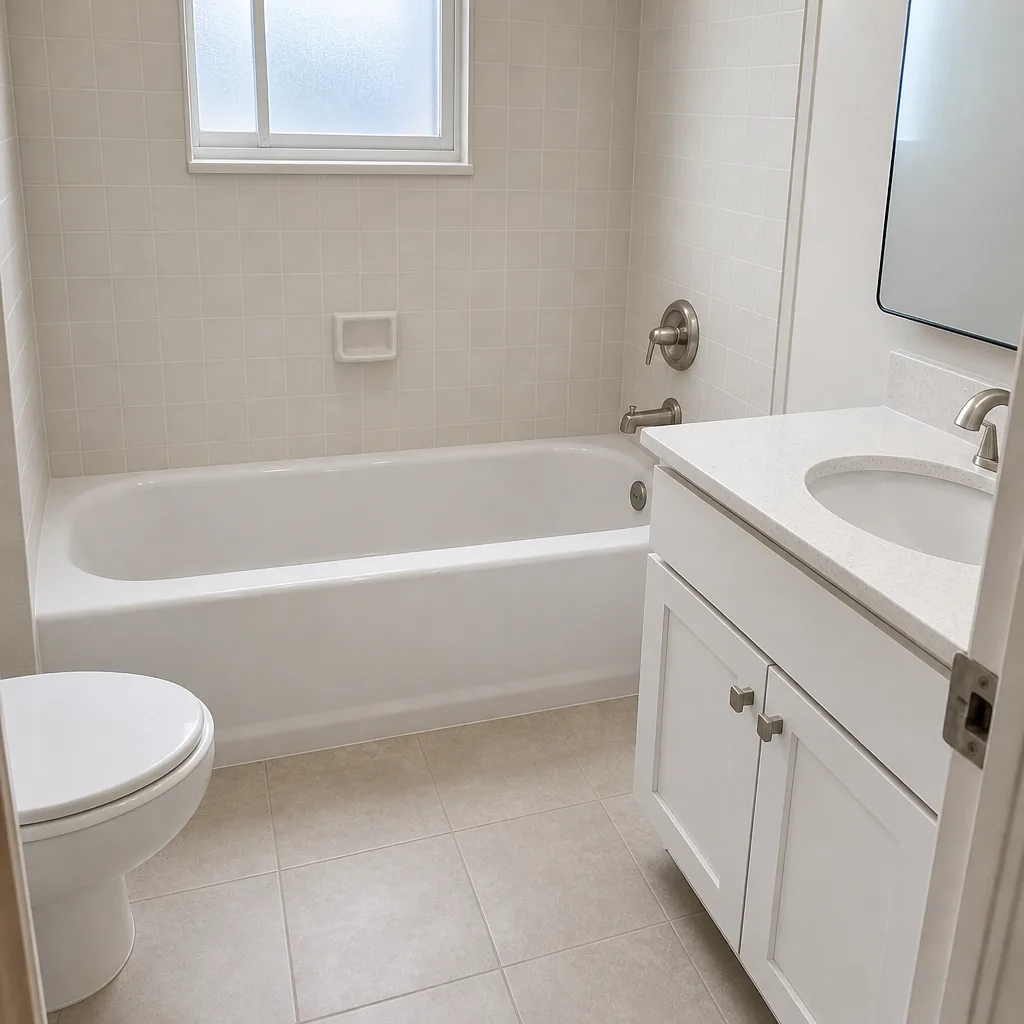 After
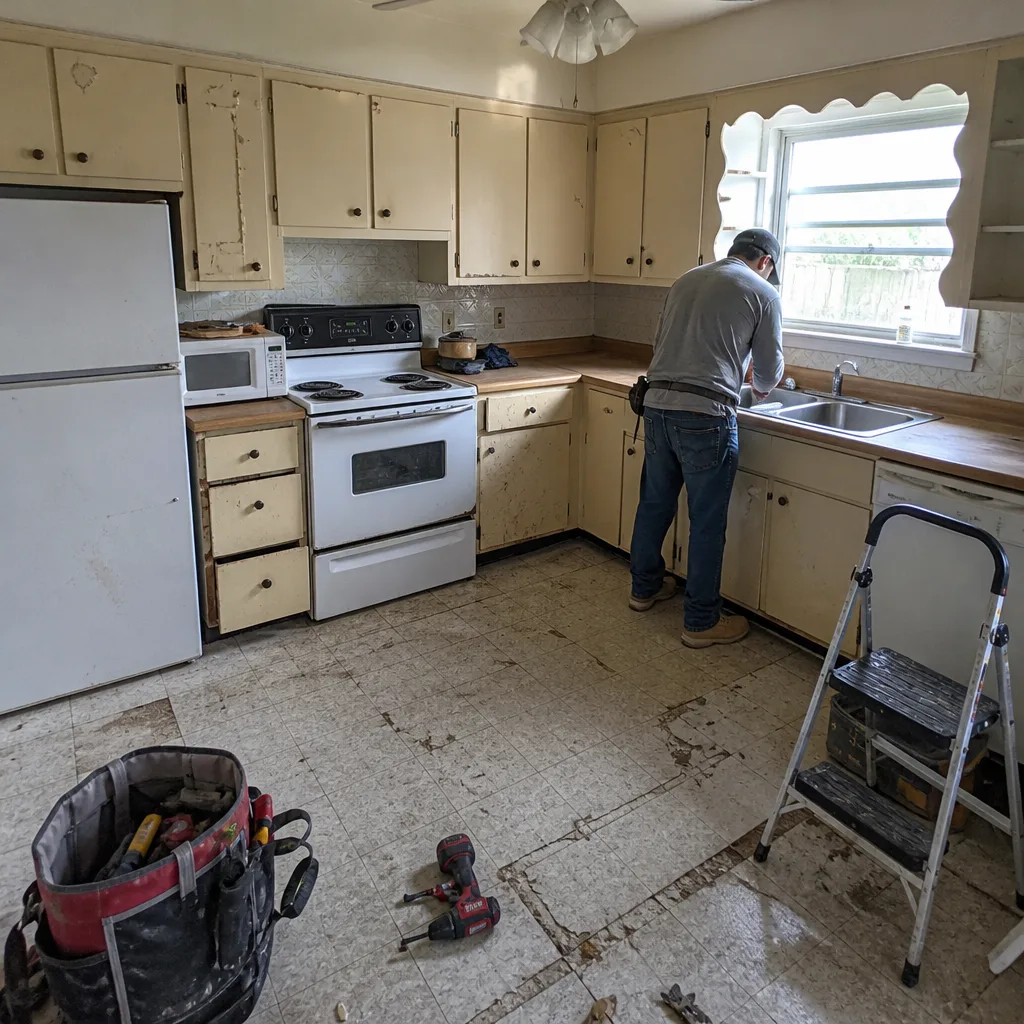 Before
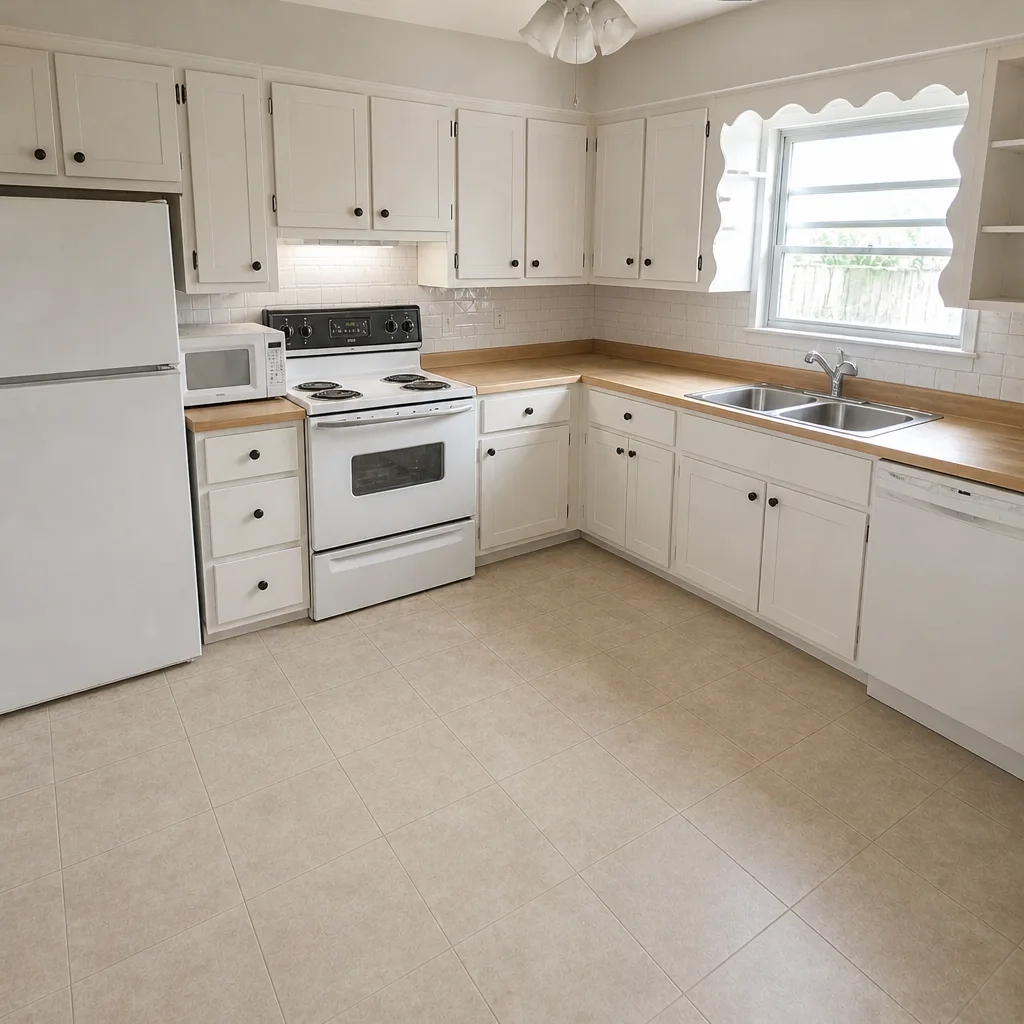 After
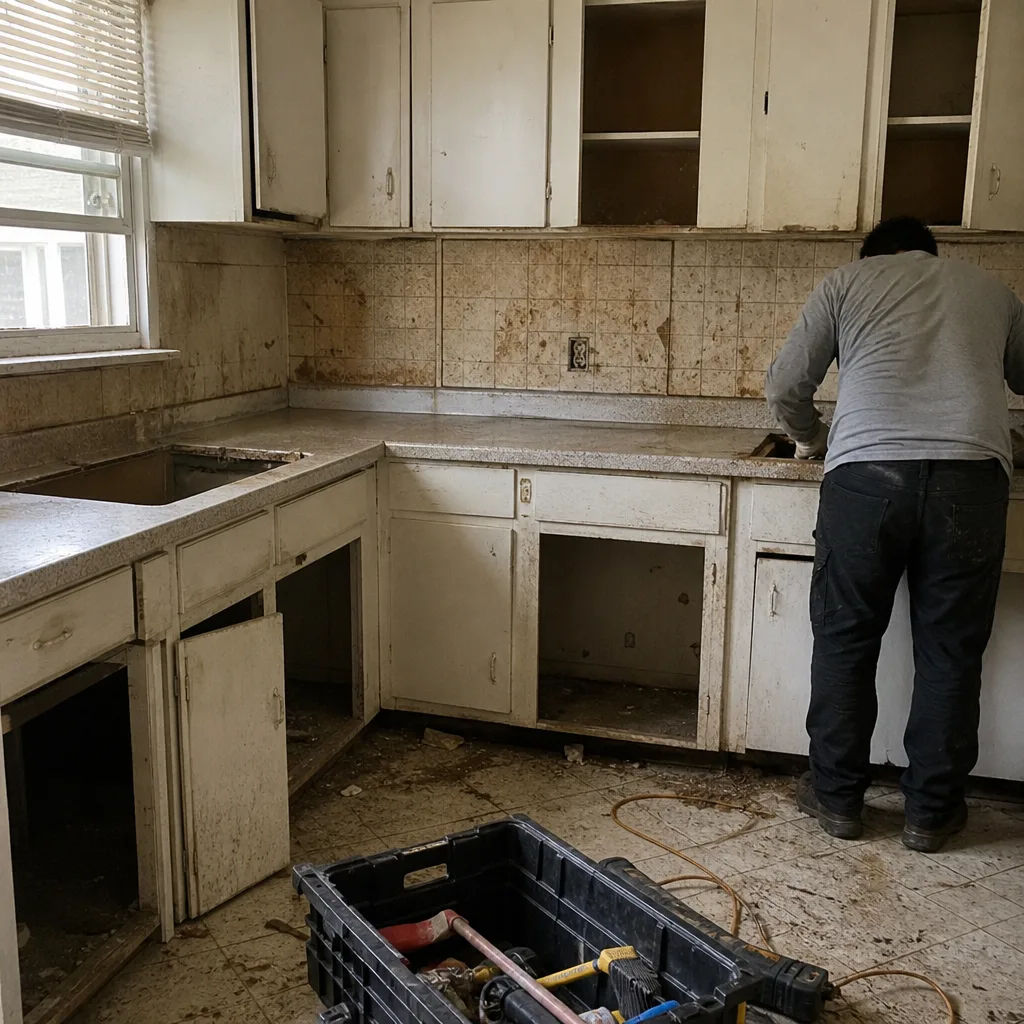 Before
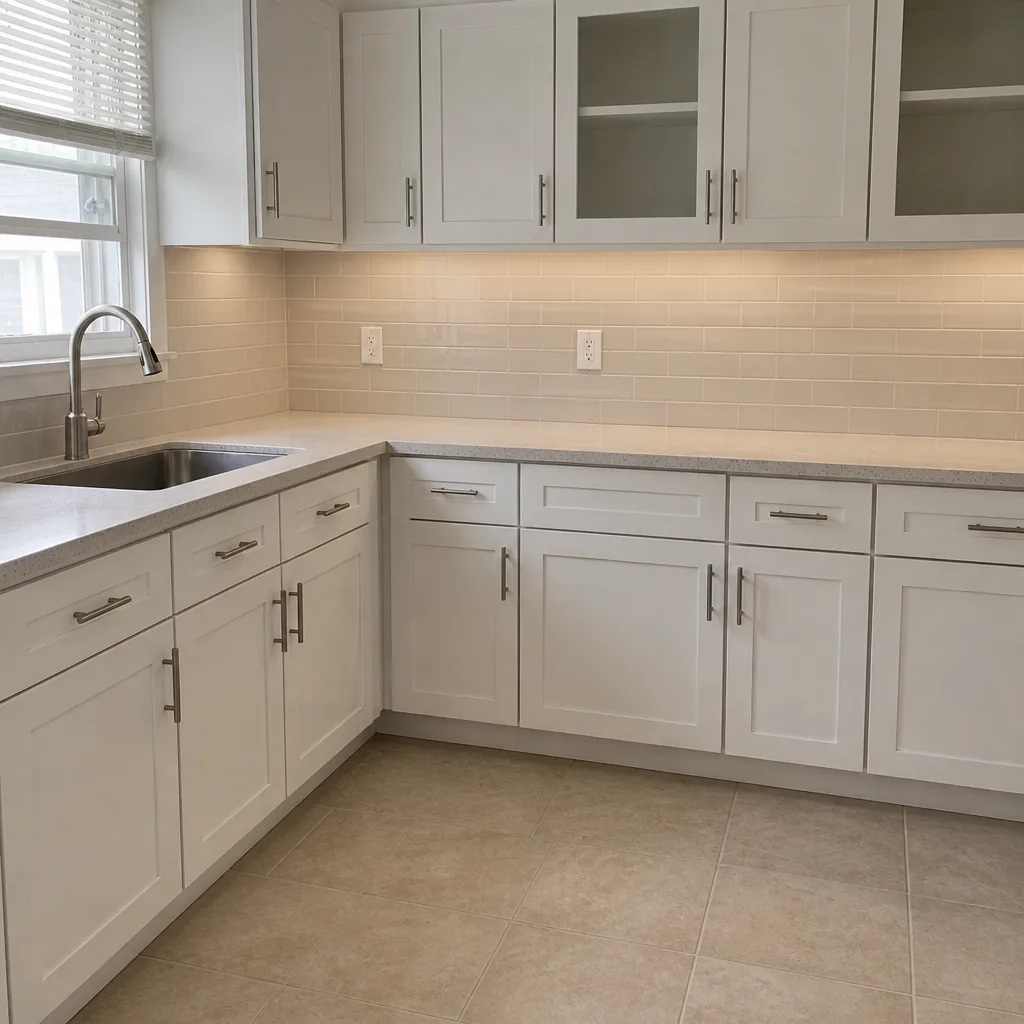 After
When to Call a Professional
Call a professional when a warning sign changes behavior: a crack widens, a roof dip appears where there wasn’t one, a section of pavers sinks as a unit, or drywall feels damp. Also call when you’re unsure whether the sign is cosmetic or structural – a professional assessment is the only reliable way to tell, and a free estimate removes the cost objection from the decision. For anything involving roof work, structural movement, or impact glass that’s come loose in its frame, don’t climb up or attempt the fix yourself. North Miami Construction offers free estimates in North Miami, and our technicians can read these signs in person. Call (855) 842-6980. We answer 24/7. Fast dispatch from 7am to 7pm, Sunday through Friday.
Frequently Asked Questions

Diagonal cracks that run from the corners of window or door frames are usually the first visible sign of differential foundation settlement in North Miami. In our experience, they often appear alongside a hairline crack on the opposite wall or a sticking exterior door. Mark the ends with pencil and date, and if the crack widens over a month, call for an evaluation. Call (855) 842-6980 for a free estimate – estimates are free.
No. Diagonal cracks in stucco fall into three categories: cosmetic shrinkage, seasonal movement, and structural movement. The first two are monitor-only; the third – a diagonal crack that widens between checks or follows a stair-step pattern in the block – needs a professional look. The direction and the rate of change matter more than the width.
Patchy granule loss on the sun-facing slope, a dipping ridge line visible from the ground, or fascia staining that keeps returning after rain all point to a roof near the end of its service life. A single isolated leak with intact shingles around it is usually a repair. Get a free inspection with a written assessment before deciding. Call (855) 842-6980 for an exact quote – estimates are free.
Efflorescence on new pavers is usually a sign of sealant timing, not a bad paver or a defective installation. The white mineral staining comes from moisture trapped under the sealant while the setting bed was still curing. The proper fix is to let the surface dry, remove the sealed layer, and re-seal after the substrate cures – not to replace the pavers.
Check behind baseboards, around window frames, and at the garage-to-house transition first – those are the three most common moisture entry points in North Miami homes. A musty smell near the floor, soft drywall, or bubbling paint in any of these spots is the earliest warning. If you find damp drywall, treat it as a same-day call rather than a 30-day monitor.
Most cities require a permit for structural repairs and for replacing a driveway base, so ask your city’s building department whether your specific scope does. For cosmetic crack filling and paver re-sanding, a permit usually isn’t required. When in doubt, ask before work starts – a professional contractor will pull the permit where it’s needed. Call (855) 842-6980 to talk through your project.
The Bottom Line
Most construction failures in North Miami homes aren’t sudden. They start as a hairline crack, a shade of granule loss, or a musty smell near the baseboard, and they give you weeks to act. The skill is in the reading: classify the crack, watch the roof from the ground, distinguish paver settling from base failure, and know the four places moisture hides in a humid climate. When a sign crosses the threshold from 30-day monitor to call-today, that’s the moment a professional assessment pays for itself. For anything structural, roof-related, or uncertain, get an expert eye on it before you patch. Call (855) 842-6980 for a free estimate. We answer 24/7. Fast dispatch from 7am to 7pm, Sunday through Friday, from the driveway to the roofline.
Written by the team at North Miami Construction.